Findings
Findings include root causes behind the systemic housing crisis exposed through a 7-Level Analysis of Tenant and Landlord roles, 6 levels of systemic escalating harm, and 6 levels of Institutional Betrayal.

Findings
While the core finding on an experience level is the "Ask<-->Harm Loop", a deeper analysis reveals insights on the source of that viscous circle - insights that enable real positive change.
The following logical-level analyses are what we call "Audience Baseline Positions" and were discovered through the Audience Attunement stage of the Thaut Process of Strategic Thought Leadership. This process discovers unmet higher values and related mental models through linguistic pattern analysis of authentic online conversations about the topic at hand by the target audience.
In this context, the topic is rental housing and target audiences include tenants, managers, and investors. Sources include tenant discussion threads on Reddit, landlord/investor forums such as BiggerPockets, and property management community discussions. These are places where people speak their minds candidly rather than performing for an audience.
The 7 Levels of Learning and Influence (the "Pullamid") is a logical-levels framework for parsing audience thinking to discover where to apply empowerment to be most helpful.
Systems Thinker Gregory Bateson's concept of Logical Levels is based on "a set of members cannot be a member of its own set" and is thus at "a higher logical level".
As noted in this study designer's 7 Levels of Learning and Influence,:
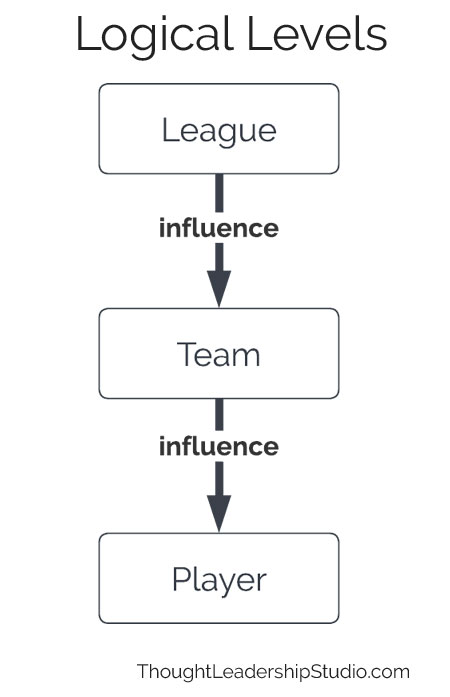
Influence flows down logical levels but not up the same way.. It's like how a player on a football team isn't a team. And a team is not a league...it's a member of a class called a "league." ...If a team changes its practice routines, that will impact the players.
But if an individual player within a team changes their performance within their practice, it doesn't impact the team the same way. It can have some impact, but if a player can't meet the team's criteria, that individual will get replaced.
The team, being at a higher logical level, supersedes the player.
Robert Dilts built on Bateson's model with his Neuro-Logical Levels model, which consider logical levels of thinking and consciousness. The study designer's Pullamid (Pyramid of Pull) is an adapted version of Dilts' model optimized for use in Strategic Thought Leadership.
The Pullamid reveals where Mental Models fail to satisfy Values and thereby reveal Strategic Thought Leadership opportunities as leverage points for paradigm-level systemic change.
It can be helpful to understand that 3 of the top 4 levels are variations of belief systems:
- Identity is beliefs about who are are. Steve Andreas' work on self concept is relevant on this level.
- Values are beliefs about what is important - in terms of feeling states like confidence or abundance.
- Mental Models are beliefs about how the world works - when prevalent, these are called paradigms and this is where the highest leverage for systemic change is, per Donella Meadows "Place to Intervene in a System" discussed earlier.
Paradigm-level change pivots on the understanding that - per Korzybski's General Semantics:
The map is not the territory.
...which is a very helpful understanding. We don't respond to "the world" directly, we respond to our maps of the world. So all we have to do is help someone expand their "map" with a new (to them) and more helpful mental model, and we have changed the world - for that person.
This is the promise of Strategic Thought Leadership - the ability to do this at scale through STL Schema and bring about a paradigm shift.
Pullamid - 7 Levels of Learning and Influence
| Level | Name | What It Reveals |
|---|
| 1 | Core Purpose | The ultimate positive mission - one that transcends the individual self and has more to do with the whole. |
| 2 | Identity | Who they see themselves as in a context |
| 3 | Values | What is important on a feeling-state level. Higher values in this context are those that unify, such as "contribution", "joy", and "oneness". |
| 4 | Mental Models ⚡ | The maps of "how the world works", which can be expressed in "If->then=meaning" structure. |
| 5 | Skillset | Capabilities and knowledge. |
| 6 | Pull | Expressed demand in action, including learning pull (searching for information) and remedy pull (trying to fix what went wrong) as well as purchase pull (exchanging money for perceived values fulfillment) |
| 7 | Pullfillment | The actual, tangible experience of what they get in return for their pull. When it falls short of expectations, a Pullfillment Gap exists. |
Per the above table, we will be exploring several instances of Pullfillment Gaps that reveal unmet values connected to prevalent stale mental models that are ripe for improvement in landlords and tenants.
? Back to Where You Were | ? top
Tenant 7-Level Baseline Analysis
Tenant Primary Unmet Values: Agency, Dignity, Justice
Related Key Mental Models (If->Then=Meaning): "If I assert my rights, then I get suppressed, which means I am powerless."
Representative Source Conversations:- "Landlord bullying me; legal aid says 'you’re better off just leaving'"
- "Why do we take so much bullying from landlords?"
- "Everything about your relationship to a landlord showcases the power imbalance."
Related Key Mental Models (If->Then=Meaning): "If suppressing people is necessary to make money, then I have to do it, which means what really happens belongs in the dark."
"If you serve people well, then you lose money, which means service is expensive.";
Owner Misalignment Summary: The values of Benevolence and Integrity - wanting to be a good person - are directly contradicted by the mental model of the Capitalist Trade-Off - the belief that profit requires moral compromise. This false dichotomy produces a Pullfillment Gap of guilt and inner conflict where there should be the peace of mind that motivated the investment in the first place.
The UK Systems Thinking Housing Study empirically disproves this mental model: designing around tenant value simultaneously improved satisfaction and financial performance across all three pilots.
? Back to Where You Were |
? top
Layers of Escalating Harm
How Initial Value-Demand Failures Compound Into Remedy Pull of Potential Eight-Figure legal exposure
Category |
Actors |
Description |
Cumulative Harm (Stacking Effect) |
|---|
Initial Purchase Pull (or Value Demand*) |
McNeil & Poyer (tenants) |
Stable shelter, agreements followed, respectful communication, clear expectations |
Baseline: Legitimate pull for shelter needs, helpful management, statutory rights |
System Response 1: Misrepresentation and Disrespect of Rights |
SAC 181 LLC, Meridian, Bayles |
"Adam is maintenance." email from Tara Bayles on September 6, 2024 initiated long-term gaslighting and harassment campaign. |
Harm: Instability of basic need of shelter, dignity harm of contractual relationship with exploitation based business, |
System Response 2: Retaliation |
SAC 181 LLC, Meridian, Bayles |
Notice to Vacate 6 days after safety requests (SC 27-40-910 retaliation); forced August heatwave displacement |
+Harm: Housing stability destroyed; elderly blind dog (Rocket) injured in unfamiliar space; life infrastructure disrupted; business momentum (Strategic Thought Leadership, Thought Leadership Studio, Recent STL Schema breakthrough innovation) halted |
System Response 3: Privacy Weaponization |
Meridian, Tara Bayles, Adam Bayles |
21-platform syndication of tenant images obtained under false pretenses (“inspection,” “AI will remove you”); Matterport tour showing Rocket in diapers, plaintiff on couch, business branding |
+Harm: Commercial exploitation without consent/compensation; false endorsement of abuser; brand damage; emotional distress compounded |
System Response 4: Obstruction |
Tara Bayles (PMIC), Meridian |
Falsified USPS postmark (felony forgery SC 16-13-10), gaslighting about mailing timeline |
+Harm: Criminal evidence tampering creates trust destruction, forces legal remedy pull |
System Response 5: Coordinated Legal Warfare |
Phelps Dunbar (Kevin O’Brien, Justine Tate), Resnick & Louis (Alicia Bolyard), IPG (Gladys Lambert) |
Frivolous AI sanctions motion, discovery obstruction (quash motions filed 42 days before LLR deadline), gaslighting pattern (“didn't happen” framing for 7 counts of an 8-count fraud case) |
+Harm: PCL-5 76/80 (severe PTSD), gaslighting severity 79/80, financial exhaustion via Big Law billable hours, Jan 28 health crisis requiring emergency accommodations |
System Response 6: Regulatory Obstruction |
Meridian (Tara Bayles), defense counsel coordination |
Witness tampering (AppFolio contact Jan 9), LLR investigation obstruction (File 2025-566), coordinated quash motions blocking corroboration |
+Harm: Public protection system sabotaged; sends a messages that tenant exploition by bad actor property managers is acceptable in South Carolina |
System Response 7: Shell Game, Valuation Discrepancies, Institutional Betrayals |
Charles S. Altman, Registered Agent of defendant SAC 181, LLC, ; Jonathan Altman (beneficial owner, Affordable Housing Commission member) |
Leave for Second Amended Complaint of October 24, 2025 ("freely given when justice so requires" but not granted in first 225 days, with 179 with no opposition on the docket), 95% probate undervaluation (Charles Realty stock 2006–2020), $5 “Flash Transfer” (Feb 21, 2007), SAC 181 valuation fraud ($1.27M property → $251K sworn probate value 2021) |
+Harm: Tax system defrauded (estate obligations evaded), housing policy corrupted (advisor profits from displacement he’s sworn to prevent), judicial system integrity undermined (loss of trust due to apparent insider protection, perjury in probate court) |
System Response 8: Law Enforcement Protects Perpetrators |
Charleston County Sheriff's Office |
Opened case in late January 2026, then closed it after Meridian counsel Bolyard contacted in spite of Proffer detailing specific fraud, harassment, investigation obstruction, and witness tampering laws broken and supportive evidence sent. |
+Harm: Undermines public trust in law enforcement, encourages bad actors with promise of no accountability, wastes of public resources allocated to protecting perpetrators instead of victims, |
Remedy Pull (Failure Demand**) Generated |
System-wide |
With jury as agents of systemic change, potential 8-9 figure exposure (via remedy pull) including: treble damages (deposit, unfair trade), punitive damages (forgery, retaliation, privacy), veil-piercing (probate fraud), regulatory sanctions, criminal restitution, malpractice claims |
Total System Cost: Systemically faulted structure has borne the fruit of existential threat to multi-generational real estate empire, Big Law firms, insurance carrier, and PMIC licensing regime demonstrating poor effectiveness of the unconscious abdication and justice-requires-status paradigms against the pull of an MVM exercising rights |
*Purchase Pull in Strategic Thought Leadership is equivalent to Value Demand in the Vanguard Method - exchange of money for value.
**Remedy Pull in Strategic Thought Leadership is equivalent to Failure Demand in the Vanguard Method - pulling from the system to fix where it fell short. This was a contribution from John Seddon to Systems Thinking, and it's conceptualization changed the game for applying Systems Thinking to service businesses. He has consistently pointed out that removing failure demand is a big leverage point in improving service business performance, including and especially financial performance.
Why This Harm Stacks: Each system response attempts to suppress accountability for the prior level, compounding rather than resolving harm. The escalation reveals paradigm level dysfunction: social systems treated as mechanical systems, per Russell Ackoff, creates cascading failure, as we are seeing.
Consider the response to pull in the form of fair-minded rights assertions: escalating harm. Which generates equivalent responses for remedy, escalating exposure - especially in the hyper transparent world the harm of the old paradigms live in now via STL Schema.
Each additional layer is another cycle of escalation of the Ask<-->Harm Loop.
? Back to Where You Were |
? top
Levels of Institutional Betrayal Revealed
Corruption Level |
Mechanism |
Actors |
Evidence |
System-Wide Impact |
|---|
Level 1: Operational Fraud |
Document falsification to manufacture statutory compliance |
Tara Bayles (PMIC 83633), Meridian |
“EMAILED 8/28/2025” office stamp with handwritten date misrepresented as USPS postmark (Sept 5, 2025 email); contradicted by Tara’s own RFA responses |
Trust destruction: If property managers falsify federal postal marks to evade $7,785 (triple damages for late return) liability, no tenant communication is reliable. Corrodes basic contract enforceability. |
Level 2: Privacy Commodification |
Unauthorized commercial exploitation of tenant images under false pretenses |
Meridian, Tara Bayles, Adam Bayles |
25+ platform syndication (May-Sept 2025) of images obtained via “inspection” pretext and “AI removal” lie; Matterport tour showing disabled elderly dog, plaintiffs, business branding |
Consent framework collapse: “Inspection” becomes content-harvesting operation. Tenants cannot safely allow property access. Chilling effect on maintenance requests. |
Level 3: Probate Fraud (Valuation Arbitrage) |
Systematic undervaluation of assets in sworn court filings to evade taxes while extracting commercial rents at true value |
Jonathan S. Altman (executor), Charles S. Altman, Altman family enterprise |
SAC 181: $1.27M property (income method: $5,276/mo rent) sworn at $251K (Nov 2021 probate). Charles Realty stock: $30K/share (2006) → $1,392/share (2020) = 95% collapse during Charleston boom. Flash Transfer: 181 Gordon to SAC 181 LLC for $5.00 same day as estate distribution (Feb 21, 2007). |
Dual-system corruption: (1) Tax system: Estate/inheritance obligations evaded via perjury, defrauding public fisc during affordable housing crisis. (2) Corporate veil: Sham capitalization creates liability shield for tort/contract violations. A High-net-worth family appears to feel they can operate with impunity, extracting from the common, burdening those they allegedly serve. |
Level 4: Regulatory Capture |
PMIC investigation obstruction via coordinated legal warfare and witness tampering |
Meridian (Tara Bayles), Phelps Dunbar (Kevin O’Brien, Justine Tate), Resnick & Louis (Alicia Bolyard) |
LLR File 2025-566 investigation obstructed via: (1) Quash motions filed Jan 8 & 12 blocking Synovus bank records-;42 days before Feb 20 LLR deadline; (2) Witness tampering-;AppFolio contacted Jan 9 (federal 18 USC 1512); (3) 32-day silence on Flash Transfer/commingling allegations while blocking corroboration |
Protection system neutralization: If Big Law can obstruct licensing investigations via procedural warfare, PMIC regulation becomes decorative. Industry self-policing fails. Vulnerable tenants lose institutional recourse. |
Level 5: Judicial Gaslighting (DARVO Litigation) |
Deny documented evidence existence, Attack victim credibility, Reverse Victim ; Offender, including with frivolous motions |
Phelps Dunbar, Resnick & Louis, IPG/Gladys Lambert (coordination) |
Pattern (Oct 2025–Jan 2026): (1) 8-count fraud case reframed as “deposit dispute” across filings; (2) AI sanctions motion (Nov 12) speculating pro se had to have used AI to file competent pleadings, without evidence and disregarding the pre-AI values-centered and strategic (as today, given Strategic Thought Leadership is the common factor) pro se competence demonstration McNeil has on the public docket against their own client; (3) Emergency ex parte motions mischaracterizing criminal agency notices as “threats” (Jan 27); (4) Litigating as if 25+ platform images, falsified postmark, LLR obstruction, retaliatory eviction in a heat wave never occurred |
Clinical harm documented: PCL-5 76/80 (severe PTSD), gaslighting severity 79/80, Jan 28 health crisis requiring emergency court accommodations. Truth-seeking collapse: When documented record (timestamped emails, platform screenshots, sworn RFAs) can be “denied from memory” by officers of the court, adversarial system integrity fails. Status superseding evidence is a symptom of the Justice Requires Status mental model, one that is demonstrably inferior for system performance when contrasted with the outside-in MVM/ cut-curb mental model which recognizes both the social system nature of the courts. |
Level 6: Policy-Profit Feedback Loop |
Public official shapes housing policy while privately profiting from practices that destabilize the system he’s sworn to stabilize |
Jonathan S. Altman (Charleston Affordable Housing Commission member, reappointed Oct 22, 2024) |
Timeline: Commission service (June 2007–Oct 2025, intermittent) overlaps with: (1) Flash Transfer scheme (Feb 21, 2007-;4 months before first appointment); (2) Probate undervaluation (~$251K sworn, ~$612K per RedFin, Nov 2021); (3) Retaliatory eviction funding (May–Aug 2025); (4) Discovery obstruction funding (Oct 2025–Feb 2026) |
Institutional legitimacy destruction: When affordable housing advisors profits from a house managed with from displacement + signs probate valuation discrepancies consistent with tax evasion, policy becomes theater. Public loses faith in reform pathways. Entrenches “system is rigged” mental model that blocks collective action. Creates asymmetric risk: Vulnerable families face potential homelessness; political elites face no consequences for eight-figure fraud. |
Charleston's housing crisis is having its root cause revealed. And it's not about the wrong regulations or even how many units can be built. Trying to fix the housing crisis with rule structures or different inventive designs - no matter how well intentioned or intelligently designed - will fail without concurrent deeper change.
When the structures that govern and regulate housing are designed and managed from mechanical thinking, zero-sum mindsets as epitomized in unconscious abdication and status requires justice, only paradigm level change can bring a true solution.
As reviewed in Methodology>Finding Leverage Points, Donella Meadows assigned changing the paradigm behind the system and freedom from paradigms as the highest leverage points for changing a system. In the Intervention section, we'll look at how STL Schema applies change through the paradigm vectors of both housing and access to justice for the vulnerable..
Why These Corruption Levels Harm All System Members
Probate Fraud (Level 3) corrodes estate planning trust for all families-;heirs cannot rely on sworn inventories, beneficiaries face IRS audits, and courts become complicit in wealth concealment schemes that shift tax burden onto wage earners.
Regulatory Capture (Level 4) destroys market integrity-;ethical property managers face mistrust when the field is resplendent with extraction operators who face no enforcement, driving a race-to-the-bottom as ethical businesspeople leave the field to avoid being entangled in an imputed profession, setting up a viscous reinforcing loop driving financially underperformance due also to the failure demand ("remedy pull") that top-down thinkers don't consider in their traditional budgeting, which the Vanguard Method has demonstrated only drives costs up.
Judicial Gaslighting (Level 5) undermines rule of law universally-;if documented evidence can be denied by credentialed actors without sanction, pro se litigants, small businesses, and under-resourced parties lose access to justice, while Big Law clients purchase impunity through procedural exhaustion.
Policy-Profit Loops (Level 6) make systemic reform impossible-;when gatekeepers profit from the problems they’re appointed to solve, captured regulation becomes permanent. This traps ethical investors in adversarial relationships (can’t trust policy guidance from conflicted advisors), perpetuates tenant despair (advocacy bodies serve exploiter interests), and breeds public cynicism.
As of April 13, 2026, the above information is incomplete. Additional layers of institutional betrayal have been identified, including patterns in local media coverage and court administrative processes. These sections are in active development. The systems analyst's documentation capacity at this stage is constrained by the cumulative harm the system has inflicted - a PCL-5 of 76/80 is a body that carries the weight of processing this information. As pressure lifts and the morass begins to drain, these sections will expand with the intention of evidentiary rigor, as has been applied to the findings already published. The delay is what it looks like when a system study costs the analyst their health.
Further, the political layer of institutional betrayal has been documented in case filings and formal notifications since March 10, 2026. Mayor Cogswell's administration has been on continuous notice of a conflict between Project 3500's stated mission and his affordable housing commissioner's family's documented extraction practices. As of April 13, 2026, zero corrective action has been taken. The intention is for this section to expand as the political system's response - or continued non-response - becomes part of the data. And lengths of silence are data.
? Back to Where You Were |
? top